
Staying safe during the monsoon
- Nov 18, 2026
 Small habits that keep colds, falls and fevers away
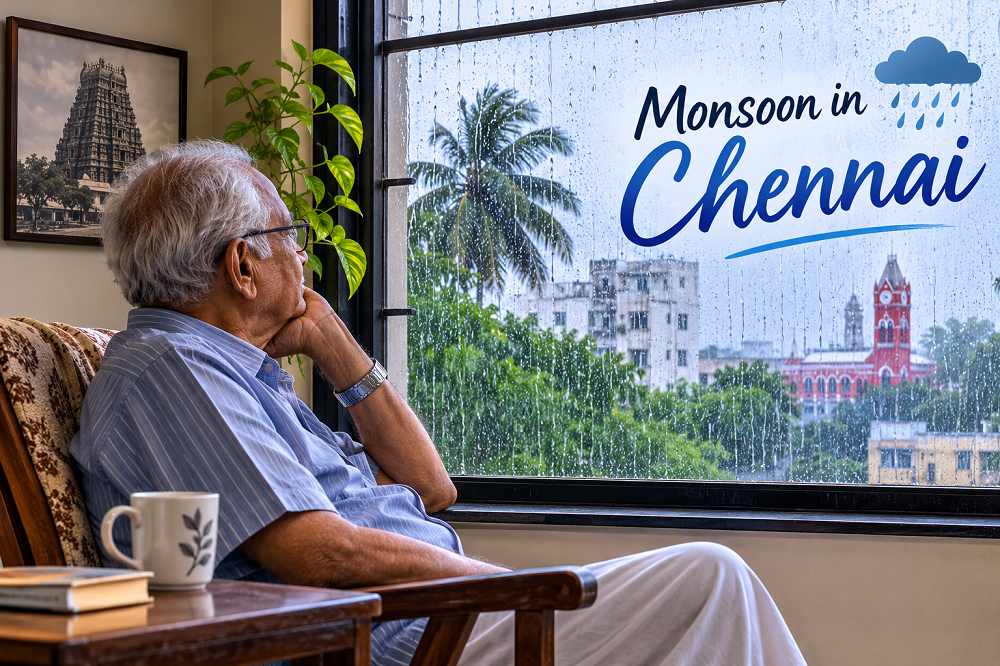
It had rained for three days without a break. Mr Raghavan, 78, sat by his window, watching the water gather on the road. His daughter had phoned twice that morning. "Appa, please don't go out to the veranda. The floor will be slippery."
He promised. But when the rain eased in the afternoon, he stepped out to bring in a towel from the line. His foot slid on the wet tiles. He was lucky. He only had a bruised elbow and a bit of a fright.
Many of us know a story like this. In Chennai, the northeast monsoon arrives every year between October and December, and we love it. The cool air, the smell of wet earth, a hot cup of tea. But for those of us over 60, the rain also brings a few risks. The good news is that most of them can be prevented with simple care.
Why the monsoon is harder as we grow older
As we age, the body does not adjust to changes in weather as quickly as it once did. Our balance is not as steady. Our immune system is slower to fight infections. Joints can feel stiffer in damp, cool weather. Many seniors also drink less water when it is cold, without realising it.
None of this is a reason to worry. It is just a reason to be a little more careful for these few months.
1. Keep your feet safe
Falls are the biggest worry in wet weather. A fall at this age can mean a fracture, and a fracture can mean weeks in bed.
- Wipe wet floors straight away, especially near the bathroom, kitchen and front door.
- Keep a dry mat at the entrance, and make sure it does not slide.
- Wear slippers with a good grip. Smooth rubber chappals are risky on wet tiles.
- Keep passages and stairs well lit, including at night.
- Use a walking stick or hold the handrail, even if you feel steady. There is no shame in it.
If you must go out, ask someone to walk with you, and carry an umbrella so that one hand stays free.
2. Stay warm and dry
A damp shawl or wet clothes can bring on a cold very quickly. If you get wet, change into dry clothes at once and dry your hair properly.
In the early morning and at night, a light cardigan or shawl is a good idea. Keep your feet covered, as cold feet make joint pain worse. Do not use damp towels or bedsheets. If the sun does come out, put your bedding and clothes out to dry.
A warm bath or a warm compress can soothe aching knees and shoulders. Please keep the water comfortably warm, not hot.
3. Eat fresh, drink safe
The monsoon is the season for stomach infections. Water can get contaminated when streets are flooded, and food spoils faster in humid weather.
- Drink boiled and cooled water, or water from a trusted filter.
- Eat freshly cooked, hot food. Avoid food that has been lying around for hours.
- Wash fruits and vegetables well before eating.
- Be careful with street food, cut fruit sold outside and food from unknown places.
- Wash your hands with soap before meals and after using the toilet.
Simple foods like rasam, pepper, ginger, garlic and warm soups are comforting, and many families have enjoyed them for generations. They will not cure an illness, but they are light and easy to digest. And please keep drinking water through the day, even when you do not feel thirsty.
4. Keep the mosquitoes away
Standing water means mosquitoes, and mosquitoes can spread dengue and other fevers. Do not let water collect in pots, coconut shells, old tyres, buckets or coolers around your home. Use mosquito nets or screens, and wear full-sleeved clothes in the evening. Even a small bowl of water under a plant pot can become a breeding spot, so empty it every few days.
5. Do not run out of medicines
Heavy rain can block roads and close shops for a day or two. Before the rains get strong, check your medicines for blood pressure, sugar, the heart and the thyroid. Keep at least two weeks of stock at home. Keep the doctor's number and your prescription handy, and keep a torch and a charged phone nearby in case of a power cut.
It is also a good time to ask your doctor about the flu and pneumonia vaccines. Please do not start or stop any medicine on your own.
6. Look after your mood
Grey skies and long days indoors can make anyone feel low. Seniors who live alone can feel this even more. Try to keep a small routine: tea at the same time, a few light stretches or a slow walk inside the house, a favourite song, a chat with a friend on the phone. If the weather allows, sit near a window to enjoy the daylight.
Talking to someone every day matters more than we think. A short call can lift the whole afternoon.
When to call the doctor
Please do not wait and watch if you or your parent has any of these:
- Fever that lasts more than two days
- Cough with breathlessness, or chest pain
- Repeated vomiting or loose motions, or very little urine
- Sudden confusion, extreme sleepiness or weakness
- A fall with pain, swelling or difficulty in moving
At this age, it is always better to be careful early than sorry later.
A gentle reminder
The monsoon does not have to keep us indoors and worried. With dry floors, warm clothes, safe food and water, and a little company, we can enjoy the rains, just as we did when we were young.
At Manolayam, surrounded by greenery and open farmland, the rainy season is one of the most beautiful times of the year. We look after our residents with the same simple care described here, so that they can enjoy the season in comfort and peace.
If you are thinking about the safety and comfort of an elderly parent this monsoon, we would be glad to hear from you. Do get in touch with us, or come and visit Manolayam to see for yourself.
This article is for general information only and is not a substitute for medical advice. Please speak to your doctor about any health concern.